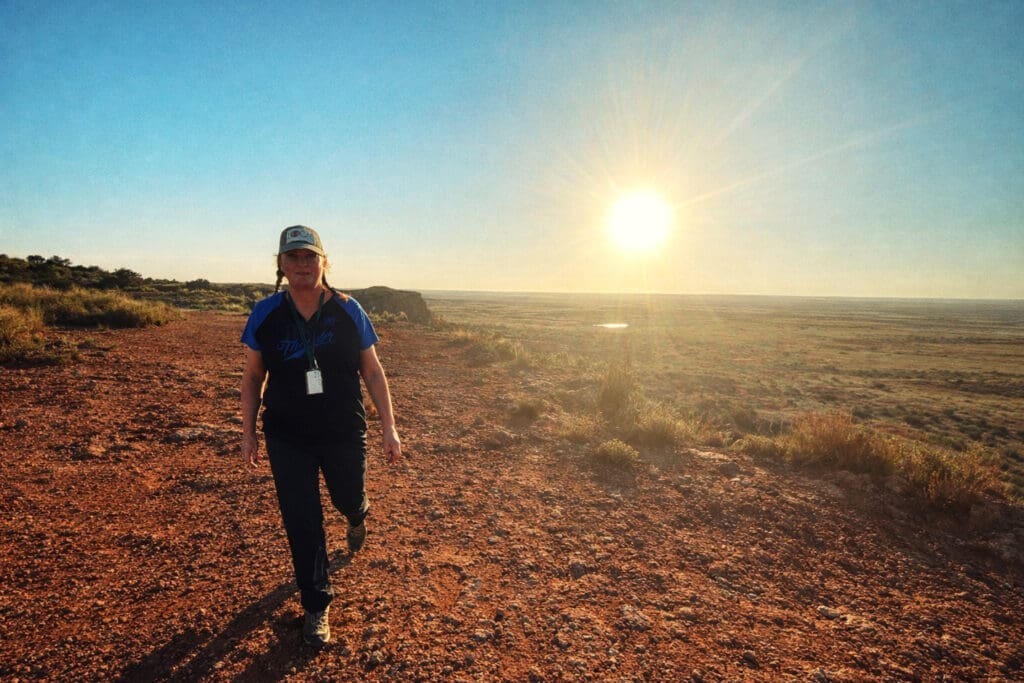
Based in Oklahoma City, Rebekka Rea enthusiastically champions Oklahoma as a versatile, production-ready backdrop and is committed to supporting the community that makes this work possible. She’s proud to be a professional member of the Location Managers Guild International and is known for finding the “impossible” locations, her professionalism and her problem-solving work ethic, blended with a healthy mix of levity and humor.
How did you get started in the film industry?
In 2021, a friend asked if I could help find houses for a production. That simple favor turned into more scouting jobs and a role as Locations Coordinator. I immediately connected with the pace, collaboration and problem-solving that location work requires and committed to learning everything I could to continue advancing in the industry.
I dove in head first. I attended a session hosted by the Oklahoma Film + Music Office, business cards in hand, ready to network. A five-minute conversation led to a referral, which led to a commercial, which led to my first location manager job on “What Rhymes With Reason.” I managed over a dozen locations ranging from studio sets on Filmmakers Ranch to the gorgeous but challenging logistics of Red Rocks Canyon and the Wichita Mountains. That project pushed me physically, mentally and professionally, including cracked ribs during scouting. The film has since won multiple awards, including “Best Family/Children’s Film” at Cannes World Festival.
Did you have any formal education or training related to the film industry before starting?
No formal film education beyond high school theatre and crew work. However, the skills and experience gained from my earlier careers, combined with the general wisdom that comes from life lessons of successes and failures, prepared me for the ever-changing challenges and little victories we experience on set.
Did you have any formal education or training related to your specific department on-set?
I wouldn’t say formal, but relevant. My background as a Promotions Manager for IRS and Island Records exposed me to the logistics of organizing a schedule, working with talent (artist meet & greets, backstage events, radio tours) and paying attention to details (band riders and green rooms) and staying calm in high-pressure environments. Leading start-up companies in sales and business development increased my knowledge around contract literacy and sharpened my negotiation skills. Co-founding and serving as the Executive Director of the Retail Gift Card Association strengthened my abilities in budgeting, diplomacy and leadership—all essential skills for effective location management
What are some of your most recent successes (credits or accolades) related to your career in the industry?
Five years ago, I remember reading about the deadCenter Film Festival and thinking about how awesome it is that Oklahoma City has this event. This year I had the privilege of participating on a panel. It was a full circle moment for me.
Working on “Twisters“ was a career-defining experience. The scale and intensity accelerated my growth and sharpened my ability to make smart, fast decisions under pressure. It raised the bar for how I approach location work and gave me a deeper understanding of the complexities involved in large-scale productions.
More recently, I worked on “The Lowdown,” a new FX series created by Sterlin Harjo and starring Ethan Hawke. It offered valuable insight into the differences between episodic television and feature films. Every project brings new challenges and opportunities, I stay open to learning something new from each one.
What has your career in the state’s film industry taught you?
To be resilient, don’t take things personally, have a side hustle (or two) and support efforts to grow the Oklahoma film industry.
We need more productions to come to Oklahoma, which means we need to support efforts to increase the Filmed in Oklahoma Act. Texas just increased its film incentive to $300 million, which will be funded every two years through 2035. If you work in this industry, advocacy matters. Educate legislators, talk to business owners and support film friendly communities. A strong incentive program benefits everyone.
What is the highlight of your career thus far?
Every day that I am blessed to wake up and go to set is a highlight!
What is your favorite aspect of working in Oklahoma’s film and television industry?
Watching and supporting the “next generation” of creatives. Scissortail Studios is a program that I reference often. It represents the best of Oklahoma by bringing exceptional film education to students who have traditionally lacked access to such resources and provides them with a strong path forward. It is a hands-on program launched by Oklahoma City Public Schools giving high school students the opportunity to learn how to make films using industry-standard equipment. I believe it is the only program of its kind in the nation and a program we can all be very proud of.
What’s the best piece of advice you have for someone starting their career in Oklahoma’s film industry?
A great attitude and work ethic go a long way. Showing up with a positive outlook and asking “what’s next?” is always appreciated. Be kind. Pay it forward.
How does someone in your field/department best promote/market themselves to those hiring in your industry?
If you are just starting out, apply for an apprenticeship. Be visible. Attend all the local industry events. Network. Stay connected. Join your departments guilds and associations. Volunteer to serve on committees.
Are there any local film organizations, resources or events that have been beneficial to you in your career?
All of them! The Oklahoma Film + Music Office has been an invaluable resource for jobs and education. Oklahoma Career Techs offers strong film-related coursework and events. The Tulsa Film Collective curates outstanding networking opportunities. The Oklahoma City Film & Creative Industries Office, the Tulsa Office of Film, Music, Art & Culture and film friendly city liaisons consistently provide essential support during scouting and production.
What’s the one item you can’t live without on set, and why?
My phone. Location Managers interface with all the department heads and are responsible for overseeing a multitude of moving parts. I may be orchestrating advance work on several locations, closing out the last location and managing logistics on the current site – often simultaneously. I have to be accessible and ready to address any request or troubleshoot any issue at any time.
Would your career be impacted without the state’s film incentive program? If so, how?
Absolutely. I do not believe we would have had enjoyed the success we have had to date in Oklahoma without the Filmed in Oklahoma Act. It is crucial that we continue to support the efforts of our industry leaders to advance increasing our current incentive program. If we want productions to stay in the U.S. and choose Oklahoma, we must remain competitive.
Where do you see yourself – AND – Oklahoma’s film industry in the next five years?
My future goals include continuing to support strengthening Oklahoma’s film industry – both on the ground as a location manager and behind the scenes as an advocate for growth. I want to help build the infrastructure, workforce and reputation that make Oklahoma a go-to destination for high-quality productions
I see Oklahoma becoming nationally recognized not only for competitive incentives, but for professional crews, diverse locations and a collaborative community. I also believe Oklahoma City will again have a state-of-the-art studio to replace the gap left by Prairie Surf – critical for attracting large-scale productions
What are you working on now or next?
I’m currently focused on developing strategic partnerships with companies capable of financing productions. These efforts have expanded my producing responsibilities – an area I’m enjoying and continuing to grow in. I’m working with several producers considering Oklahoma for 2026 projects and am confident that our locations, crew base and incentive program will secure their commitment.
Each featured individual or business is given the provided questions to answer in their own voice. Other than formatting and grammar, the answers are personal to each featured voice and are not provided by the Oklahoma Film + Music Office.